What are the best games like Neptune’s Pride and Subterfuge?
If you’re looking for games like Neptune’s Pride, start with Subterfuge. If you’re looking for games like Subterfuge, start with Neptune’s Pride. Both are free to start. If you’ve played both and want a deeper war, with cities, supply lines and a new map every match, AshDomes is the next step. It is free, always, and in closed alpha now.
Full disclosure
We make AshDomes, so we’re not neutral. We also love the other two, and we’ve tried to give them their due.
What Neptune’s Pride and Subterfuge have in common
Both are slow real-time strategy games, sometimes called slow RTS or async strategy. The clock never pauses and nobody waits for your turn, but everything takes hours. You don’t need fast hands. You need a plan, a decent memory and the ability to lie to someone you like.
That pace does something a normal strategy game can’t. You watch an attack crawl toward you for a day, knowing precisely when it lands. You have time to beg for help, broker a deal or sell out a neighbour, and so does everyone else. The fighting is simple on purpose. The other players are the hard part.
So a game like Neptune’s Pride or Subterfuge needs three things: real time that keeps running when you log off, moves slow enough to see coming, and enough players that nobody can win without talking. Plenty of browser strategy games have the first. Few bother with the rest.
Neptune’s Pride: the reference point
Neptune’s Pride is a browser game from Iron Helmet Games, designed by Jay Kyburz and released in 2010. PC Gamer UK named it webgame of the year, and a second edition, Triton, followed in 2013. If someone tells you a game ended a friendship, it was often this one.
You spend cash on stars to raise their economy, industry and science, then send carriers of ships across the galaxy. A standard game ticks every hour and pays out production once a day. The first player to capture a set share of the stars wins, usually half. Fights are automatic and the defender gets a bonus, so the numbers are knowable and the arithmetic is merciless.
Its strength is how little there is in the way. A few systems, one clean map and a chat window. Games run for weeks, sometimes a month or more, and that is the commitment to weigh: a bad early position can mean weeks of playing for second place, or for revenge.
Subterfuge: the same knife, in your pocket
Subterfuge launched on iOS and Android in 2015, from Ron Carmel of World of Goo, Noel Llopis and Albert Reed, and its designers cite Neptune’s Pride as an inspiration. A Steam release has been announced.
Two to ten players fight beneath the sea, mining Neptunium and sending submarines full of drillers between outposts. The first to 200 kilos wins, unless the match uses Dominion rules, where holding enough outposts does it. Specialists break the rules in small, nasty ways, and a captured one can wreck a plan you spent days on.
What it added to the genre is the Time Machine: scrub forward to see where everything will be, then schedule orders in that future. Free players get a limited number of scheduled moves, and paying lifts the cap. Matches average seven to ten days, which is short enough to recommend to people with jobs. The trade-off is a smaller canvas, with less to build and less ground to learn.
AshDomes: the same war, with cities
AshDomes is a slow real-time strategy game, free, always, and currently in closed alpha. It runs in the browser first, with iOS and Android to follow. You play a dead general, dragged back to fight in a dome for the entertainment of something watching from above it. It keeps what we love about those two games, the hour-long tick, the private deals, the dread, and asks a different question: what if the map and the logistics were part of the fight?
The ground is a weapon
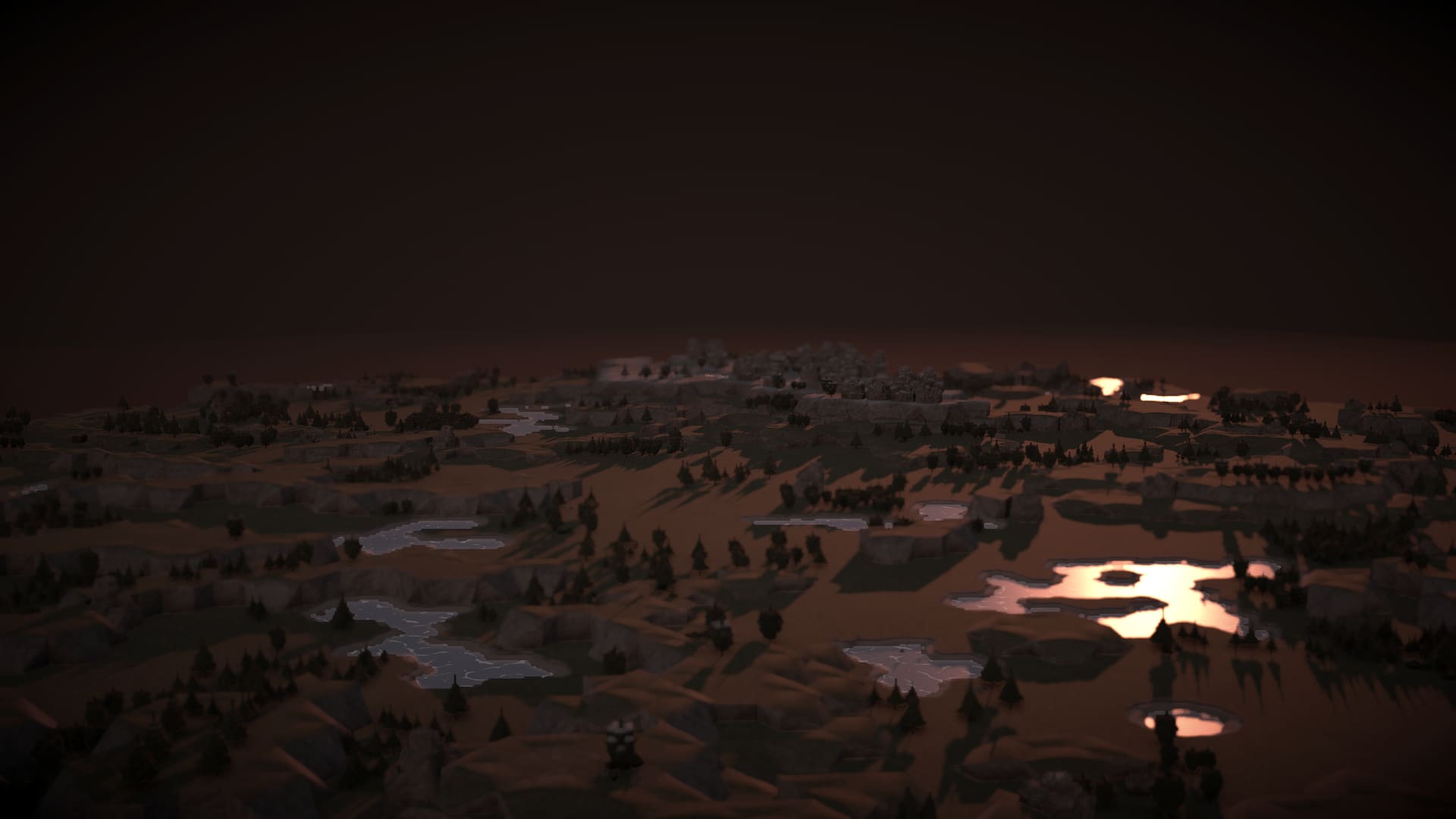
Neptune’s Pride has stars and Subterfuge has outposts. Both are points in open space. AshDomes is a hex world grown fresh for every match, with ridges, forests, rivers and lakes. High ground extends how far a city sees and shoots, and a ridge blocks sight as well as movement. Nobody has solved the map, because nobody has played it before.
Every city keeps its own books
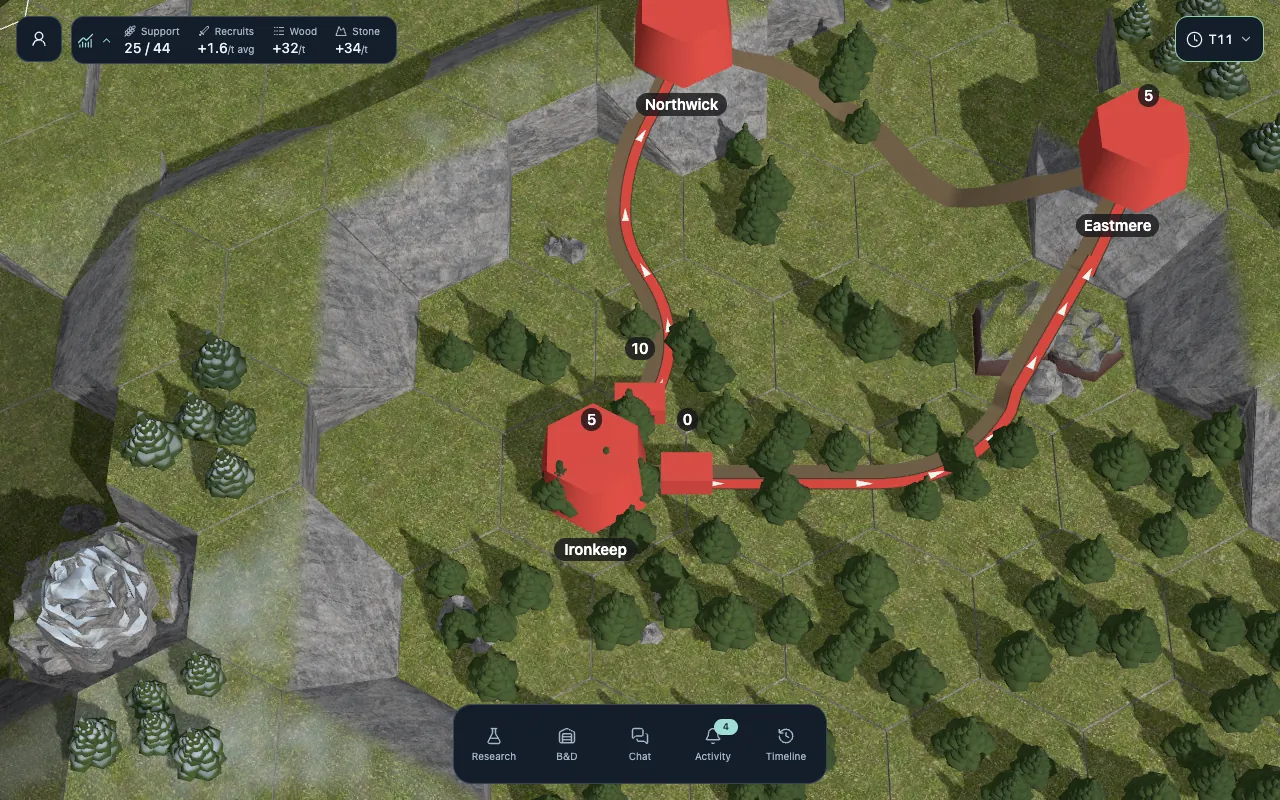
There is no empire-wide bank. Each city harvests wood and stone from the ground around it into its own stockpile, and food sets how many soldiers you can field. A rich forest city can’t pay for anything in a quarry city until a caravan carries the goods over. This is the biggest departure from both games, and where much of the depth comes from. The strategy is deciding what each city becomes and how it connects to the rest. The execution is moving soldiers and materials on time, across a map where every caravan can be seen.
Roads you don’t control
Cities grow roads on their own to any city within reach, including your enemy’s. Caravans carry soldiers and supplies down them, slowly, in plain sight. A finished road also shows you the rival city’s garrison and upgrades, and shows them yours. Where you settle decides who you end up connected to, and you don’t get a vote on theirs.
A future you can scrub
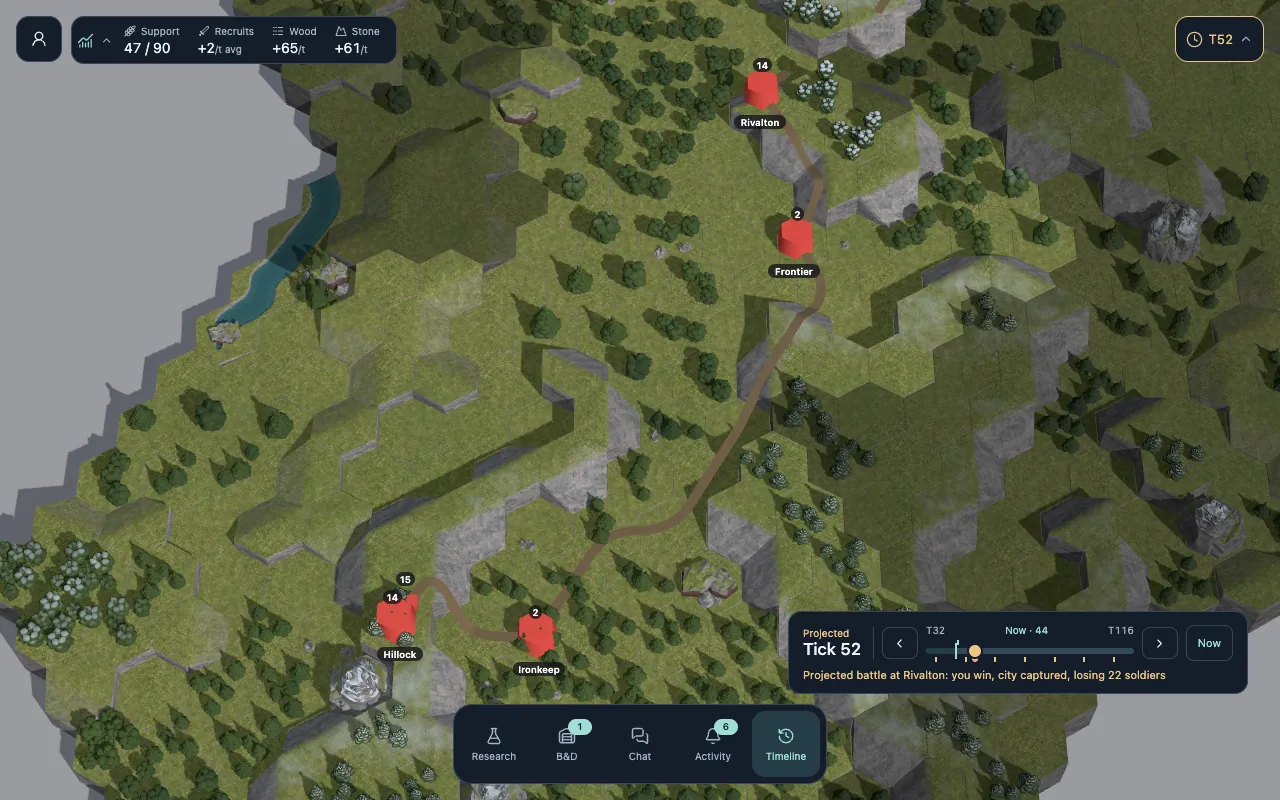
Subterfuge players will know this one. The time wheel slides up to three days ahead and half a day back. Caravans move, stockpiles fill, and coming battles show who wins and at what price. You issue orders in the future you’re looking at, and they fire on their tick while you sleep. If you’ve used the Time Machine, you already know how this feels.
Arithmetic and betrayal
Neptune’s Pride veterans will find the battle system familiar. There are no dice, the defender strikes first, and if you know both sides’ numbers, you know the result. Alliances are between two players and bind nobody. Allies share sight, which means a good friend knows exactly where your weak cities are. To win, be the last general standing or hold 90% of the land for a full day while everyone is told about it.
Free, always, and in closed alpha
AshDomes will always be free, and there is no pay-to-win option. No amount of real money buys an advantage, ever. The game is in closed alpha now, and invites go out by email: leave your address to get one. The field manual has the rules and screenshots from the current build.